


The PCoIP side of this comparison is now shaped by vendor deadlines, not by benchmarks. HP stopped selling Anyware to new customers, Omnissa made Blast Extreme the forward path for Horizon, and AWS set an end date for PCoIP-based Amazon WorkSpaces.
RDP is unaffected. It is still Microsoft's protocol, still uses port 3389 by default, and remains the standard way to reach a Windows machine you control.
What changes is which protocol you deploy for which job, and which deadline applies.
TL;DR
- HP Anyware is end-of-sale, not instantly switched off. New sales ended May 7, 2026. Renewal purchases close October 31, 2027, while maintenance and support for eligible multi-year terms can continue through October 31, 2029.
- Horizon is moving to Blast Extreme. PCoIP code is absent from client and agent releases after the final Extended Service Branch. That ESB receives security and bug-fix support for three years from its original release, putting its PCoIP window around late 2028.
- Amazon WorkSpaces Personal has a separate cutoff. AWS stops accepting new customers for PCoIP WorkSpaces on July 31, 2026. Existing customers can use them until October 31, 2027, when PCoIP connections stop.
- PCoIP Ultra is not a clean long-term escape. Horizon can broker HP Anyware PCoIP Ultra sessions, but that route inherits HP Anyware's end-of-life. Blast Extreme is Omnissa's forward path.
- RDP is unchanged. It remains the practical choice for direct access to a Windows host or VPS. Microsoft provides clients for Windows, macOS, iOS/iPadOS, Android, and the web; Linux users rely on third-party clients such as FreeRDP.
- Fidelity-sensitive workloads need a workload test. Do not assume standard RDP is a drop-in PCoIP replacement for CAD, VFX, or color-critical work. Test Blast Extreme, Amazon DCV, Parsec, or RustDesk against the actual codec, color, peripheral, and latency requirements.
What Happened to PCoIP
PCoIP did not fail technically. Its vendor path closed. The sequence matters because it determines how much time a running deployment has.
| When | What happened |
|---|---|
| 2021 | HP acquires Teradici |
| May 7, 2026 | New HP Anyware sales end |
| July 31, 2026 | AWS closes PCoIP WorkSpaces to new customers |
| November 1, 2026 | Anyware Manager Installable support ends |
| October 31, 2027 | AWS PCoIP connections end; HP Anyware renewals close |
| October 31, 2029 | HP Anyware support ends |
Three vendor decisions now set three different PCoIP deadlines.
New sales ended on May 7, 2026, according to HP's HP Anyware end-of-life notice. Renewals remain available through October 31, 2027, and support can extend through October 31, 2029 for eligible multi-year terms. Anyware Manager Installable, the on-premises manager, has its own support end date of November 1, 2026. HP's zero-client products also have separate dates, so hardware should be checked against its specific lifecycle notice.
On the virtual desktop side, the schedule comes from Omnissa's Horizon notice. PCoIP code is removed from Horizon Client and Agent releases after the final Extended Service Branch. That branch continues to receive security and bug-fix releases for three years from its original ship date, so its practical PCoIP window is around late 2028. Blast Extreme is the forward path for Horizon.
AWS has a separate Amazon WorkSpaces Personal PCoIP end-of-support schedule. New customers cannot adopt PCoIP WorkSpaces after July 31, 2026. Existing customers can create and use them until October 31, 2027; after that date, users cannot connect to PCoIP WorkSpaces. AWS directs customers to migrate to Amazon DCV.
Horizon can also broker HP Anyware PCoIP Ultra sessions. That integration may help a specific transition, but it inherits HP Anyware's lifecycle and is not Omnissa's long-term protocol path.
For more background on the protocol itself, see What Is PCoIP.
What PCoIP Is, and Why People Chose It
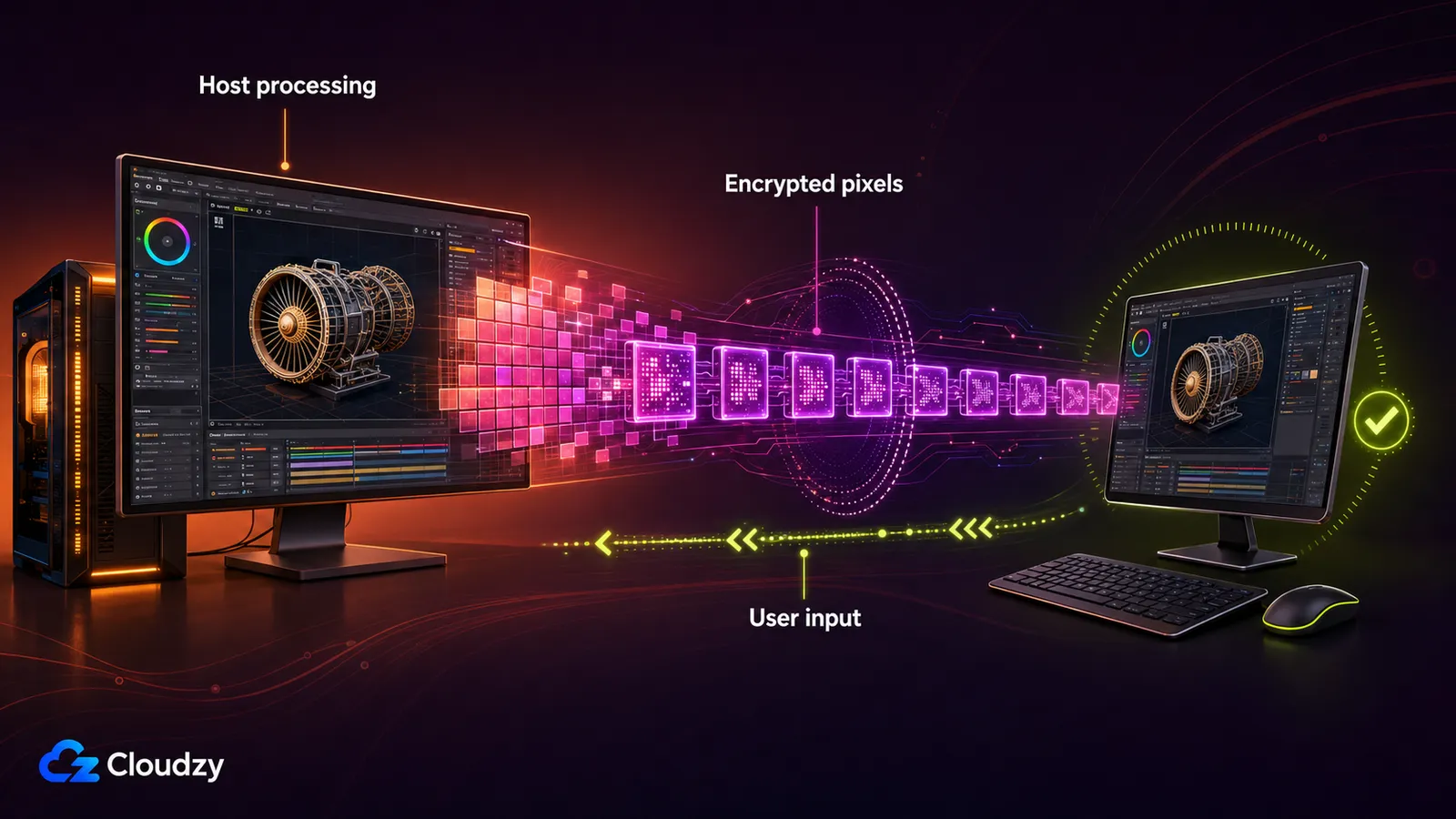
PCoIP is a pixel-encoding remote display protocol that typically uses both TCP and UDP on port 4172. The host renders and compresses the display, encrypts it, and sends it to the client; user input travels back to the host. Endpoints include zero clients, thin clients, laptops, tablets, and phones.
Encoding rendered pixels instead of relying only on drawing commands helped PCoIP adapt to changing screen content, bandwidth, and latency.
Why PCoIP Was Chosen
PCoIP was chosen for demanding WAN sessions because it adapted to bandwidth and latency while preserving usable image quality. For an engineer opening a large CAD assembly from a branch office, or a colorist reviewing graded footage from home, that behavior could determine whether remote work was practical.
Current HP Anyware agents use AES-256-GCM encryption. Older deployments could negotiate AES-128-GCM, so administrators should verify the cipher actually in use rather than rely on a historical default.
The vendor wind-down is not a technical verdict on PCoIP. Existing Teradici host-card and zero-client environments may keep working within their support windows, but new designs need a supported replacement and a migration date tied to the vendor path they use.
What RDP Is
RDP is Microsoft's Remote Desktop Protocol, used by Remote Desktop Services and Remote Desktop Connection. The server listens on TCP and UDP port 3389 by default.
RDP is Microsoft's own proprietary protocol. It is not VNC-based and has no architectural relationship to VNC, which uses the Remote Framebuffer (RFB) protocol. The two are competing approaches to the same problem. For a direct feature comparison, see RDP vs VNC.
RDP uses several supporting specifications, including TPKT, T.125 Multipoint Communication Service, and X.224. Session traffic is usually asymmetric: display and media data flow mainly from the server to the client, while keyboard, mouse, and other input flow back to the server.
Microsoft provides RDP clients for Windows, macOS, iOS/iPadOS, Android, and web browsers. Linux users can connect through third-party implementations such as FreeRDP. In Horizon, RDP remains available for supported use cases, but Blast Extreme is Omnissa's primary display protocol.
PCoIP vs RDP vs Blast Extreme
The table below is organized around the rows a current deployment decision turns on: transport, encryption, display and peripheral handling, client reach, and vendor status. Vendor status is the row I would read first.
| Criterion | PCoIP (legacy) | RDP | Blast Extreme |
|---|---|---|---|
| Transport | TCP and UDP, typically port 4172 | TCP and UDP, typically port 3389 | TCP and UDP |
| Encryption | AES-256-GCM in current HP Anyware | TLS-protected; NLA recommended | TLS with AES-128 default; AES-256 optional |
| Multi-monitor | Supported, including zero clients | Multiple local displays supported | Multi-display supported |
| WAN bandwidth optimization | Built in; a core strength | Adaptive; depends on content, codec, color depth, and settings | Built in |
| Peripheral redirection | USB, audio, video, clipboard | Printers, drives, audio, clipboard | USB, audio, video, clipboard |
| Client OS support | Broad; includes supported zero and thin clients | Windows, macOS, iOS/iPadOS, Android, and web; Linux via third-party clients | Windows, Linux, macOS, iOS, Android, and web |
| Vendor status | Deadlines vary: AWS 2027; Horizon ESB around late 2028; HP Anyware 2029 | Actively supported by Microsoft | Omnissa's forward path |
The RDP rows follow Microsoft's Remote Desktop Services client guidance and RDP bandwidth guidance. The Blast Extreme rows follow Omnissa's Blast Extreme display protocol guide.
What to Deploy Now
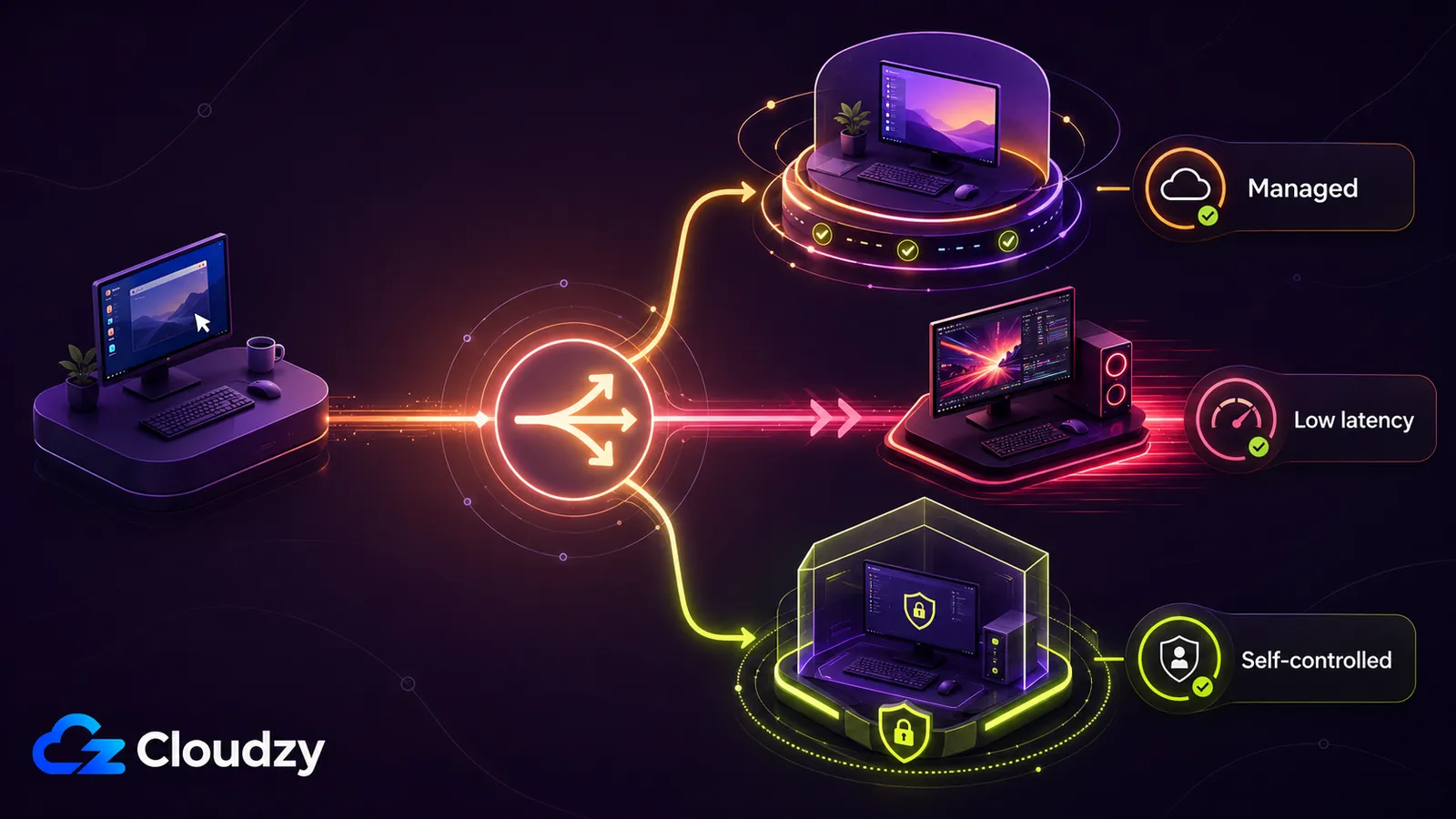
Four common situations lead to different answers. Start with the platform you are connecting to, then validate the workload.
Choose RDP if You Need Direct Access to a Windows Machine
This is the simplest case. You have a Windows host, whether a physical machine, VM, or VPS, and you need a session on it. RDP hosting is built into supported Windows editions, and Microsoft clients cover the major desktop and mobile platforms. If this is your first setup, follow our guide to connecting to a Windows VPS with RDP.
RDP is also the right choice for shared-session work on RDS hosts, where multiple users need concurrent sessions against pooled resources. That was true when this article was first written and none of the vendor changes above touch it.
RDP needs a Windows host you control and a deliberately secured access path, such as a VPN, RD Gateway, bastion, or source-restricted firewall rule. If you do not already have a host, a dedicated Windows instance with administrator access and a dedicated IP address is available from Cloudzy's RDP servers.

Get an RDP server with instant setup, full root access, and NVMe storage.
Buy RDPChoose Blast Extreme if You Run Omnissa Horizon
If your desktops live in Horizon, Blast Extreme is the supported forward path. Current clients and agents move beyond built-in PCoIP, while staying on PCoIP means remaining on the final Extended Service Branch with a fixed support window.
Plan and test the protocol change against the Horizon ESB lifecycle. HP Anyware's dates matter only if your design also depends on HP Anyware or PCoIP Ultra.
Choose Amazon DCV if You Run PCoIP WorkSpaces
AWS recommends migrating PCoIP WorkSpaces to Amazon DCV before October 31, 2027. Use the WorkSpaces protocol-modification workflow, test application and peripheral behavior, and complete the change before users lose the ability to connect. AWS documents the protocol-change procedure.
Choose a Workstation-Focused Protocol if Fidelity Is the Constraint
Do not assume standard RDP is a drop-in replacement when PCoIP was selected for CAD, VFX, color-sensitive work, high-frame-rate content, or specialized peripherals. Test the real application, codec, color mode, displays, peripherals, bandwidth, and latency. RDP may be sufficient for some workloads; if it is not, evaluate a workstation-focused option.
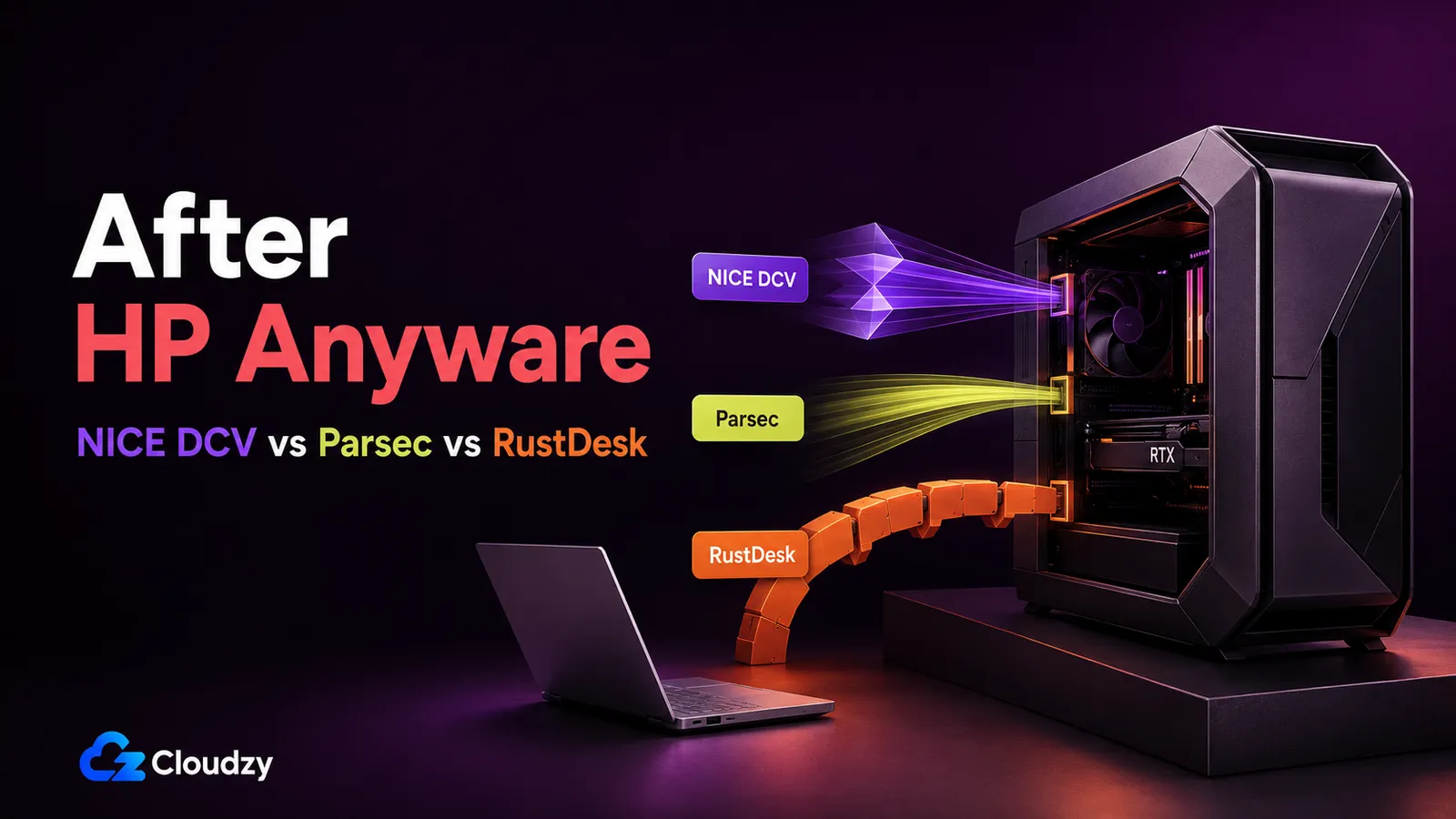
Candidates include Amazon DCV (formerly NICE DCV), Parsec, and RustDesk. Amazon DCV can be installed on hosts in cloud or on premises. Parsec's host runs on your machine and media is peer-to-peer when possible, but its application still uses Parsec services for coordination. RustDesk can use a self-hosted backend. Compare image quality, peripherals, identity, licensing, and control-plane dependencies before choosing. That decision is covered in depth in our head-to-head of NICE DCV, Parsec, and RustDesk for remote workstations.
RDP's Security Track Record
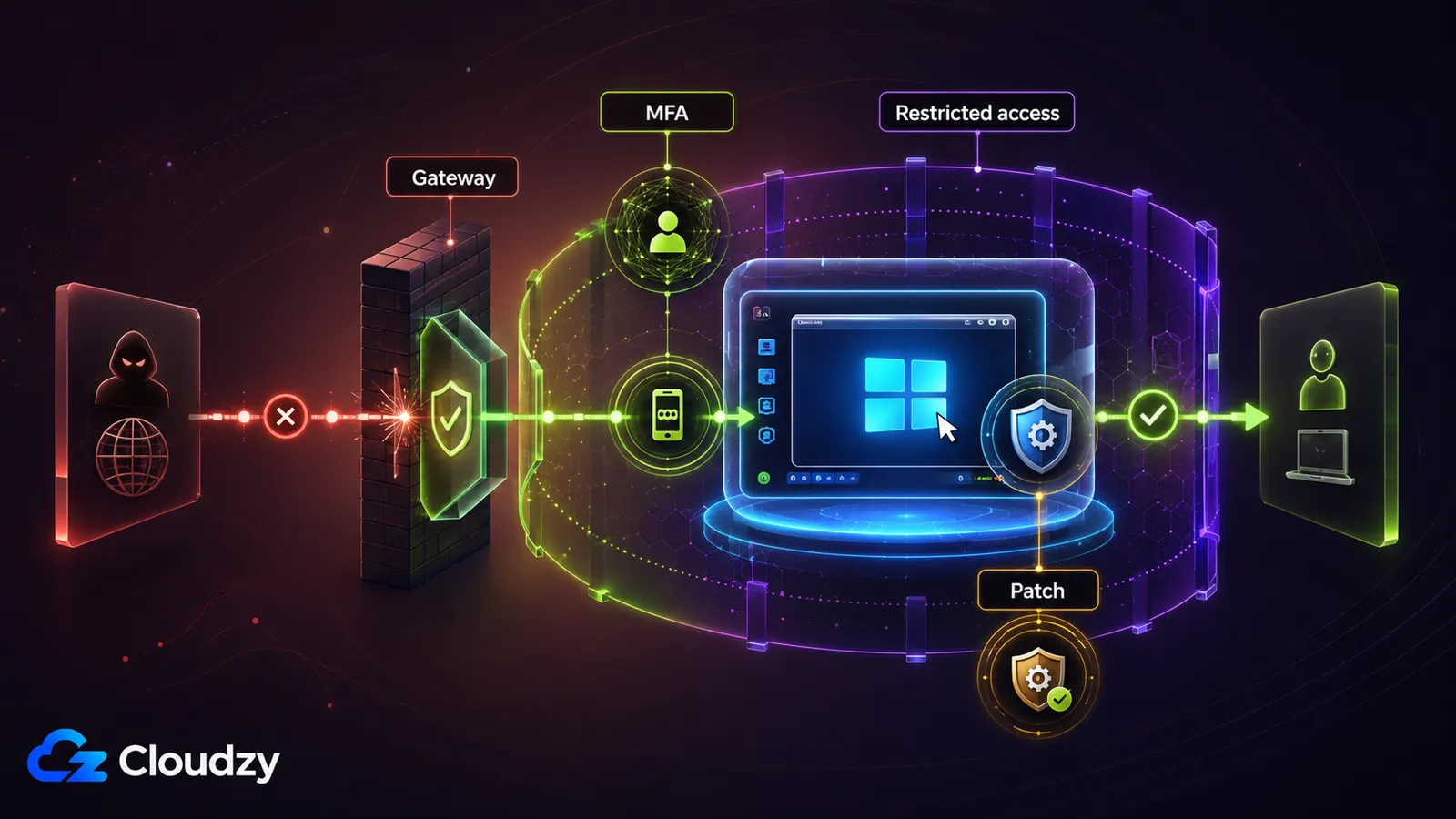
BlueKeep (CVE-2019-0708) was a wormable Remote Desktop Services vulnerability disclosed and patched in May 2019. Current systems still need normal patch management; BlueKeep is not a reason to leave supported hosts unpatched or to treat every RDP deployment as equivalent.
The recurring exposure is an RDP endpoint reachable from the public internet, especially when port 3389 is open to all source addresses. Those endpoints attract credential attacks and also increase the impact of future service vulnerabilities.
Do not allow inbound RDP from 0.0.0.0/0. Patch the host, enforce Network Level Authentication, use strong account and lockout policies, and reach the session through a VPN, RD Gateway, bastion, or narrow source restriction. Add multi-factor authentication where the access architecture supports it. For the full hardening checklist, see our guide to securing RDP.
These controls reduce different risks and should be layered. Choosing another display protocol does not replace patching, identity controls, or a protected access path.
Where This Leaves a Running PCoIP Deployment
PCoIP does not have one universal shutdown date. Horizon's built-in implementation is limited to its final ESB, AWS PCoIP WorkSpaces stop accepting connections on October 31, 2027, and eligible HP Anyware support can extend through October 31, 2029.
Use the earliest deadline that applies to your environment as the migration date. Move Horizon estates toward Blast Extreme, PCoIP WorkSpaces toward Amazon DCV, and fidelity-sensitive workstations toward the option that passes a real workload test. RDP remains the straightforward choice for direct access to a secured Windows machine.
Frequently Asked Questions
Is PCoIP Discontinued?
PCoIP is being retired on different schedules. HP Anyware reached end of sale on May 7, 2026, with eligible support extending through October 31, 2029. Horizon's built-in PCoIP is limited to the final ESB. AWS PCoIP WorkSpaces remain usable for existing customers only until October 31, 2027. Check the vendor path your deployment actually uses.
What Replaces PCoIP in Omnissa Horizon?
Blast Extreme is Omnissa's forward path. Horizon can also broker HP Anyware PCoIP Ultra sessions, but that option inherits HP Anyware's end-of-life dates and is not a clean long-term substitute.
Is RDP Better Than PCoIP?
They were built for overlapping but different jobs. RDP is the standard choice for direct access to a Windows machine and has broad client coverage. PCoIP was often selected for adaptive, high-fidelity remote workstation sessions. Today, test the workload rather than assume either protocol always performs better, and include vendor support dates in the decision.
Is RDP Based on VNC?
No. RDP is Microsoft's own proprietary protocol, developed as part of Remote Desktop Services. VNC uses the Remote Framebuffer (RFB) protocol, which is a separate and unrelated design. They are competing approaches to remote display, not variants of each other.
Discussion
Comments
Sign in to join the discussion.